





Fully automatic frequency modulation ultrasonic plastic welding machine with technology synchronized with Europe and the United States
A new generation of ultrasound systems in sync with advanced technologies in Europe and America


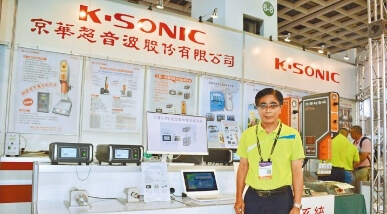
Jinghua Ultrasonic Company, after five years of research and development, launched a new generation of ultrasonic system in June 2012. It uses a full-bridge IGBT module as the power conversion component to replace traditional power transistors. This improves the load welding characteristics, load amplitude maintenance rate, and horn start-up characteristics of traditional ultrasonic systems, enhancing product welding quality. When configured on Jinghua Ultrasonic's plastic welding machine and metal welding machine series, it elevates the quality of ultrasonic welding technology and services. The successful development of this technology allows Jinghua Ultrasonic to be technically synchronized with top European and American brands such as Branson, Duken, Telsonic, Rinco, KLN, and Mecasonic in high-end ultrasonic applications, leading Taiwanese and Chinese counterparts by at least 10 years.
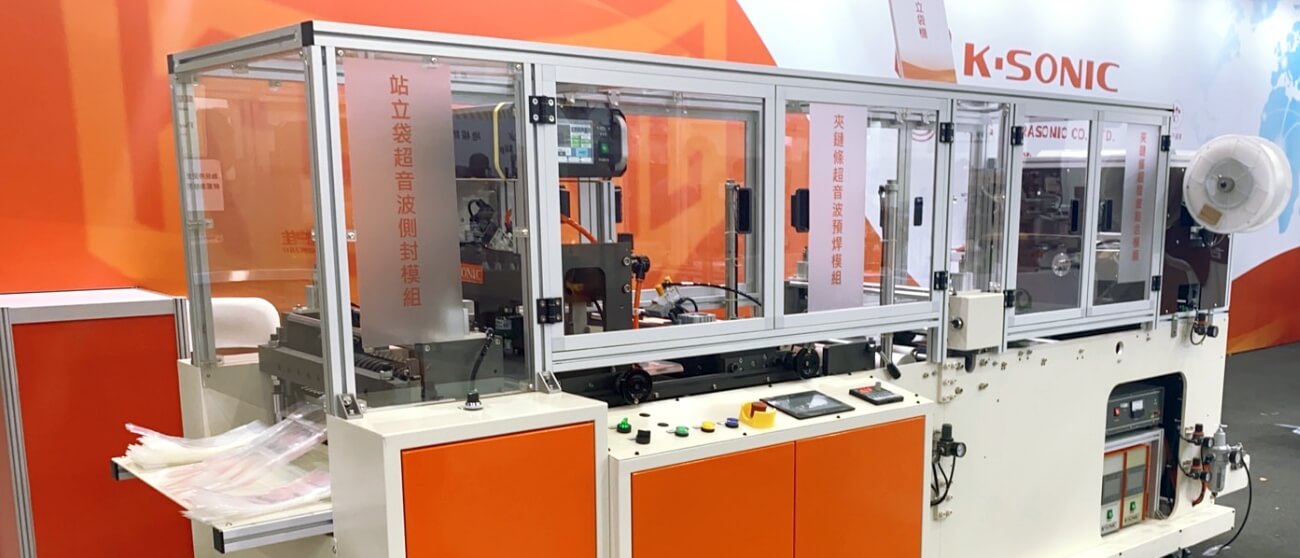
Jinghua Ultrasonic Company Chairman Li Qing-Fen stated that the advantage of the new generation ultrasonic system is its automatic control of the resonant frequency when replacing ultrasonic horns, eliminating the need for manual frequency adjustment and avoiding frequency deviation caused by horn temperature rise. The use of a full-bridge IGBT module replaces traditional power transistors, increasing the current during switching and improving conversion efficiency, which raises the amplitude of the ultrasonic transducer by about 15%. When configured with a booster of the same gain ratio as the traditional system, a higher amplitude is achieved, allowing the horn design gain ratio to be appropriately reduced, resulting in better welding effects and extended horn life. By utilizing the IGBT's maximum conducting DC voltage and adjusting the pulse width from small to large, coupled with the time for the pulse to change from small to large, triggering the IGBT switching, the high voltage during ultrasonic startup can be reduced, relatively lowering the horn trembling during startup. The impedance of the new system's post-stage resonant circuit matches the load characteristics, causing the amplitude during load welding to increase by approximately 15% compared to no-load operation.
Introduction to the New Ultrasonic System
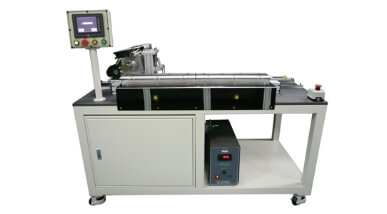
The new generation ultrasonic system will be configured on Jinghua Ultrasonic Company's plastic welding machine and metal welding machine series, providing the industry with high-quality ultrasonic welding technology and services.
Description of Differences and Features between the New Ultrasonic System and Traditional Systems
| Item | New Ultrasonic System | Traditional Ultrasonic System | Advantages of New System |
|---|---|---|---|
| Resonant Frequency Control | Ultrasonic Frequency Phase Automatic Lock Technology | Manual Tuning Coil Adjustment |
|
| Ultrasonic Switching Main Power Component | Full-Bridge IGBT Module | Multiple Power Transistors in Parallel |
|
| Ultrasonic Switching Circuit | Single-Phase Full-Bridge Switching Circuit | Single-Phase Half-Bridge Switching Circuit |
|
The new ultrasonic system possesses the following ten major features due to the special design technologies described above:
- Automatic ultrasonic horn frequency control, eliminating the need to tune the horn resonant point
- Special circuit design to compensate for load welding amplitude and enhance welding capacity
- Adopts full-bridge IGBT module as the power driving component, enhancing durability
- PWM technology controls ultrasonic amplitude, allowing linear adjustment from 50% to 100%
- PWM technology controls ultrasonic start-up characteristics, reducing horn jitter during high-voltage start-up to protect the horn
- 9 stages of ultrasonic slope start-up control to adapt to horns with different characteristics
- LCD display of ultrasonic frequency and amplitude percentage, clear at a glance
- Ultrasonic frequency deviation and high voltage overload protection
- Automatic frequency control technology prevents frequency deviation caused by horn temperature rise, which affects welding characteristics
- Automatic ultrasonic detection upon power-on